

KORU9 – Open Call
Traces of Labour
KORU9 invites artists to think about work
Work arises from contemporary jewellery art itself. Work is activity that produces, maintains, transforms, or sustains something: materially, socially, or symbolically. Work is as timeless and global a theme as jewellery – life is structured around work. Jewellery and work are connected as builders and expressions of identity : both carry values, stories, and meanings that are tied to a person’s life and their place within a community. Jewellery allows its wearer to make inner experiences, personal histories, and a sense of belonging to specific groups or traditions visible. Similarly, work shapes identity both through concrete skills and achievements and as part of a broader social and cultural system of meaning.
Work enables and generates new possibilities, but it also provides a lens through which issues of equality and inequality can be examined. Many societal injustices are closely linked to working life. Social class, gender equality, the concentration of wealth, children’s rights, and modern slavery are all themes that jewellery artists may address, for example by drawing parallels with the Western history of jewellery. The challenges of contemporary society related to sustainability, acceleration, and consumption are likewise reflected in working life.
Work is often understood as physical labour, yet intellectual and meta-work frequently remain invisible, even though psychological labour, such as emotional work, is now more widely recognised. Work can also be performed by non-human actors, including machines, artificial intelligence, and the natural world as a whole. Various tools, instruments, protective equipment, workwear, insignia and badges, the objects and items that workers carry and wear, resemble jewellery in their symbolism and function. Yet jewellery and adornment are rarely seen as a central part of work. Between jewellery and work there are as many points of connection as there are differences and contradictions.
The Finnish Jewellery Art Association hereby announces the open call for the juried exhibition at the ninth international contemporary jewellery triennial KORU9. The exhibition is open to all professional artists, artist groups and students who are working as jewellery artists. We also welcome artists from other fields who focus on creating new ideologies and aesthetic approaches in the sense of contemporary jewellery.
The main purpose of the KORU9 exhibition is to present international contemporary jewellery extensively. Alongside the exhibition, the event includes workshops and a seminar that bring together artists, lecturers, researchers, and people interested in contemporary jewellery.
KORU9 seminar and workshops will take place in Lappeenranta, Finland in June 2027. Information about the workshops and the seminar program will be announced later.
The KORU9 exhibition will run from April to September 2027 at Riihisaari – Savonlinna Museum. Riihisaari is a unique museum island in the national landscape of Olavinlinna Castle in the Finnish lake district. Riihisaari provides permanent exhibitions by the Savonlinna Museum as well as a variety of non-permanent exhibitions the year round.
As in previous years, the association aims to print an exhibition catalogue.
HOW TO APPLY
The open call is open to all professional artists, artist groups, and students working as jewellery artists. We also welcome artists from other fields who focus on creating new ideologies and aesthetic approaches in the sense of contemporary jewellery.
Each applicant can suggest 1–10 current pieces made no earlier than 2024. There are several months between the publication of the open call and the application deadline, which is meant to encourage the production of new pieces. Artists may apply with finished pieces that will be available for the exhibition from April 2027 till September 2027. The jury will select a group of pieces that together form a cohesive exhibition within the given theme. For this reason, we ask that all submitted pieces be available for display during the exhibition period. The form of the artwork is not limited, it can be wearable pieces, installation, video, etc. The exhibition application is submitted anonymously.
The participation is free of charge, but the selected artists will be responsible for sending the pieces to Finland, which includes possible insurance and postal costs as well as customs formalities and fees. The organizer will be responsible to insure the pieces during the exhibition, as well as for the costs of sending them back to the artist.
APPLICATION REQUIREMENTS
The application should be one PDF file of max 5 MB, in horizontal format (landscape orientation), including all following information:
1–10 pieces of the works that will be available for the exhibition
all work should be current, with none produced before 2024
one art piece per page with the following information: title of the artwork (if existing), type of jewellery/artwork, year, materials, size and short introduction of pieces (max 500 characters).
artist’s country of origin / country of residence
artist statement (voluntary) max 2000 characters
if applying with a video, include a link for the jury to access the video on Youtube, Vimeo or a similar streaming platform (note! your name must not be visible on the channel.)
name the application PDF file using an alias
when sending the application, please write your name and contact details in the email, do not include them in the PDF, as the applications are submitted anonymously.
attach a separate CV of max 1 page A4 with the email
send the application to: info@koru9.fi
DEADLINE 15th November 2026 at midnight (UTC+2)
Note: the applications will not be printed, please respect the maximum size of the file. Selected artists will be asked for printable image files of the selected pieces later.
Applicants will be notified of the results of their entry by email in December 2026.
For questions please contact: info@koru9.fi
Sharing of this information is much appreciated!
KORU9 JURY
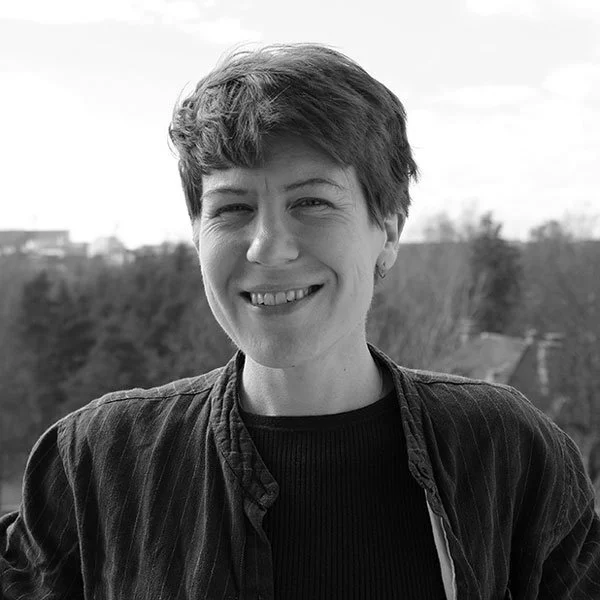
MINNA HENRIKSSON
(she/her)
visual artist
Minna Henriksson (b. 1976, Oulu, Finland, lives in Helsinki) is a visual artist working with a disparate range of tools including text, drawing, painting and linocut. She studied art in Brighton, Helsinki and Malmö. Henriksson’s work relates to leftist, anti-racist and feminist struggles. Her works are often based on extensive archival research and draw from real historical events aiming to bring forth marginalisation and oppression, and to highlight positions of power. Dealing with historical cases she aims to politicise processes in the present that seem neutral and inevitable. A thematic in her work is the ideological nature of history writing itself. Henriksson is also interested in exploring the language of political art and modes of representation.
Henriksson has been active in various collectives, and often works collaboratively. She is a member of leftist art workers’ association Kiila (The Wedge). In 2017 she was awarded the Anni and Heinrich Sussmann Artist Award, a Viennese foundation promoting artistic work committed to the ideal of democracy and antifascism.
(image credit: Roza Boynik)
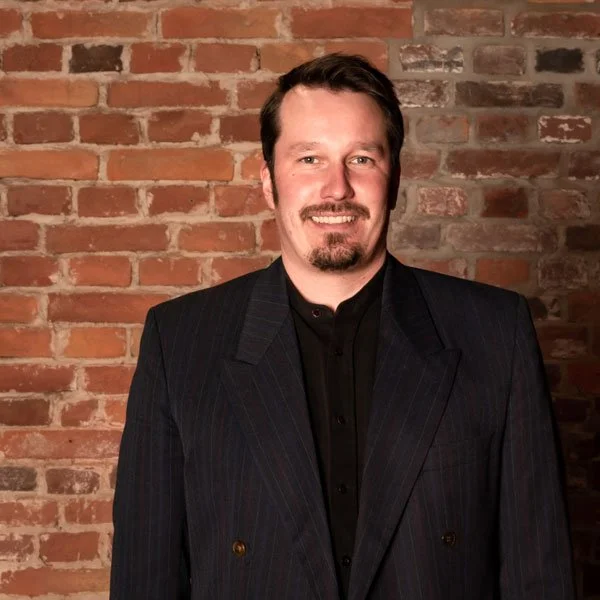
NIKKE KAARTINEN
museum director and cultural activist
Nikke Kaartinen lives in Savonlinna, surrounded by Lake Saimaa and works as a museum director of Riihisaari – Savonlinna Museum. His professional interests include culture and art management, cultural heritage, maritime heritage, cultural tourism and event production – as well as on a personal level film culture, roots music and traditional Finnish sahti. Contemporary jewellery art has been close to his heart over 20 years.
(image credit: Riihisaari – Savonlinna Museum
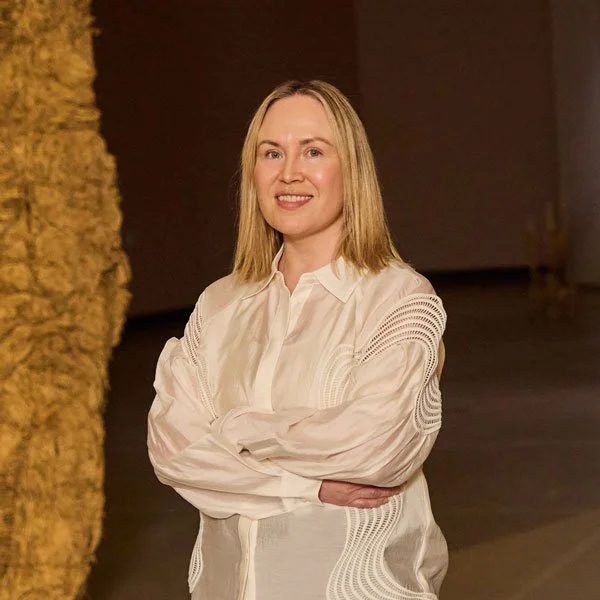
KI NURMENNIEMI
curator (MA, M.Soc.Sc.), doctoral researcher
Ki Nurmenniemi is an interdisciplinary curator with over 15 years of experience working in the field of contemporary art. Nurmenniemi has curated art exhibitions and projects in Finland and internationally, with a particular focus on addressing the climate and ecological crisis through art. Nurmenniemi curates, writes, and conducts research within the context of art museums, biennials, artist residencies, and interdisciplinary research groups. In recent years, Nurmenniemi has worked as a curator of temporary exhibitions at Malva Museum in Lahti and curated permanent commissioned works for public spaces.
(image credit: Tommi Mattila / Malva)
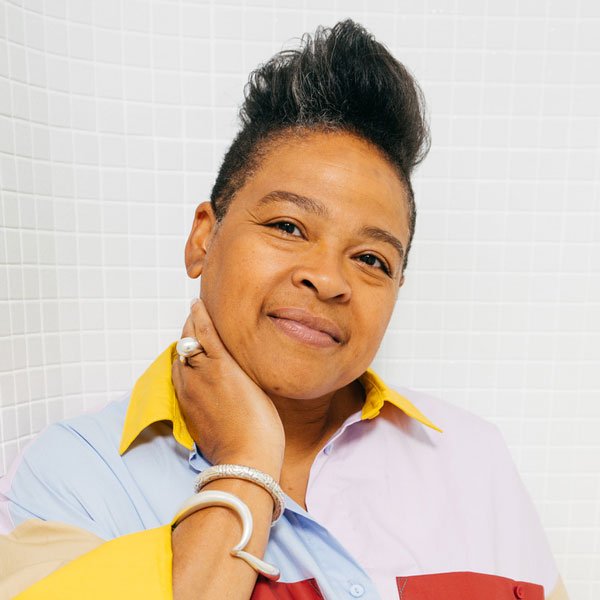
CHEQUITA NAHAR
artist, curator, educator, professor at Academy of Arts Maastricht
Chequita Nahar (b. 1970, Paramaribo, Suriname) lives and works in Maastricht and teaches at the Academy of Arts Maastricht. She studied jewellery design there herself and then completed her studies with a Master's degree at the Sandberg Institute in Amsterdam. Her work is part of museum collections such as the Rijksmuseum, Stedelijk Museum, Museum Arnhem, CODA, Textielmuseum Tilburg, Design Museum Munich and private collections. She is the winner of the Talente Award, Herbert Hofmann Prize and Francoise van den Bosch Prize. In addition to her work as a creator, she is active as a boardmember in various cultural foundations in the Netherlands.
Her work stems from her bicultural background and is a fusion of different cultural influences. In her work, she combines Surinamese crafts and techniques with methods derived from contemporary jewellery practice. Creating carriers through which cultural and social issues take shape and find expression in form and material.
Her latest collection, for example, is an exploration of the different ways in which we clean ourselves, others or in different ways. Sometimes as a ritual or as a necessary practice, but also the role that objects, their materials and language play in these rituals, from a historical and contemporary perspective.
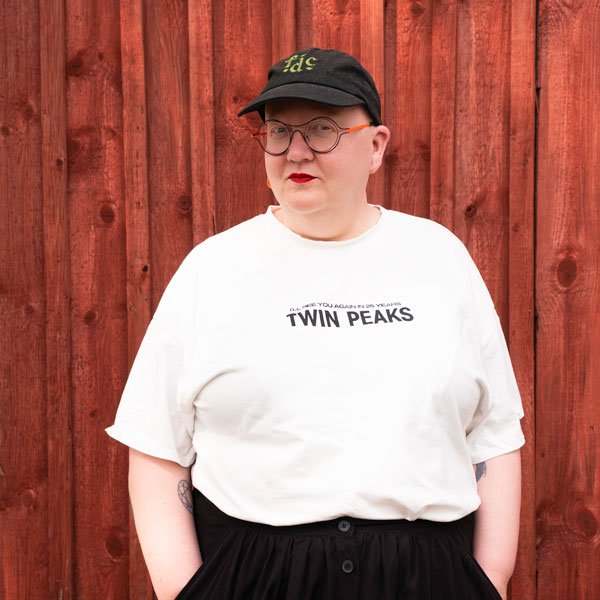
JENNI SOKURA
artist, lecturer, MA of Culture and Arts
In Jenni Sokura’s work the focus has been on contemporary jewellery from a visual arts point of view. This shift, which began already during her studies, has been significant. Realizing that jewellery is a means of creating art on par with other art forms has been liberating for her. With an understanding of the distinctive characteristics of contemporary jewellery Sokura also teaches this field in the Institute of Design and Fine Arts in LAB University of Applied Sciences. Sokura has been working to develop the art scene both in her hometown in Southern Carelia and nationwide through both volunteer work and association activities with colleagues.
Sokura has lately been working with themes such as food and cultural meanings attached to it as well as Finnish cultural traditions and folklore creating installations, objects and wearable pieces. Sokura has been exhibiting both in Finland and internationally. Jenni Sokura (1983) is a Finnish artist living and working in Helsinki and Lappeenranta, Finland.
(image credit: Antti Heikkinen)